2003 Season
The Darlings
A World Premiere.
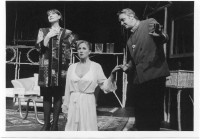
A black comedic look at the parents in Peter Pan. It is set in the present, in an upscale townhouse. Mrs Darling is a socialite and George Darling is a white collar criminal with the U S Attorney’s Office closing in. George has decided that he must escape to Switzerland, but his wife refuses to believe that his problems are real. She goes off to receive an award for her work with “brownish” children. George then confides in Nana, his dog and drinking companion, his disappointment in the devolution of his marriage. Upon Mrs Darling’s return, they notice that their children, Wendy Peter, and Michael to are missing – it takes them awhile, though, as they only speak to their children through the intercom. The Darlings proceeded to try to retrieve their children, each in his own way. In doing so, they explore their commitment to parenthood and to each other.
Downloaded – and in Denial
A World Premiere.
The Pavilion
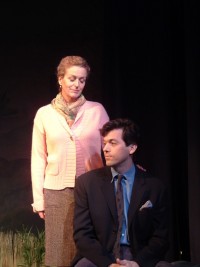
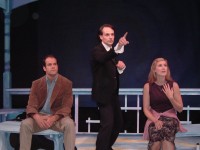
Hailed by critics as an “an Our Town for our time,” this play is by turns poetic and comic, romantic and philosophical. Peter returns to his twenty-year high-school reunion with dreams of winning back Kari, the girl he left behind after an unexpected pregnancy ended their relationship. Standing in Peter’s way is Kari’s bitter-as-ever resentment, her husband and the fact that Peter still hasn’t grown up. As the night progresses, both Peter and Kari are led, through their interactions with a host of characters all played by a virtuosic Narrator, to face the consequences of choices made long ago and start back into life with newfound strength and bittersweet resolve.
Tea for Three
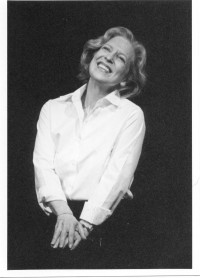
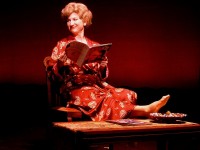
What is it like for a woman when her husband becomes the president of the United States—and she is suddenly thrust into the spotlight? This witty, sly and deeply moving script explores the hopes, fears and loves of Lady Bird Johnson, Pat Nixon and Betty Ford. In three scenes taking place in the family quarters of the White House just prior to the end of living there as the wife of a president, each of the women confides alone to the audience. Secrets are spilled about their early years, their husbands’ rise to power, their romances with the men, their unique paths as wives in the White House, and their feelings about imminent retirement. Lady Bird Johnson, while preparing a tea for Pat Nixon, defends her husband’s quirks but finally admits to herself, “Politics is his oxygen.” Mrs. Nixon, drinking tea alone in her room on the eve of her husband’s resignation, works on her mail, picks at her food and guardedly recalls happier times before exploding in anger about Watergate and the political world. Betty Ford is discovered reading a TIME magazine in her bathrobe. Forestalling preparations for tea with Rosalyn Carter, Betty lightheartedly recalls past escapades, but eventually admits to being quite lost about life after the White House. Defiantly pushing back the fear, she sails out the door to meet Mrs. Carter. Each of the three portraits becomes intimate, by degrees, as the women wrestle with what Pat Nixon called “the hardest unpaid job in the world.”
Skylight
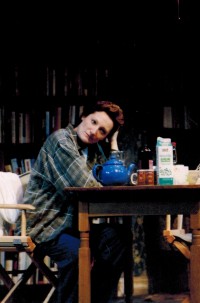
On a chilly night in East London, schoolteacher Kyra Hollis receives an unexpected visit from Tom Sergeant, Kyra’s one-time boss and long-time lover. After the painful (and unresolved) dissolution of Tom and Kyra’s relationship, the pair have pulled away from each other physically, emotionally, and ideologically, as Tom continues to focus on his business ventures and Kyra donates her time to teaching the underprivileged. Tom and Kyra grapple with each other, moving between tender passion and vicious political polemics, as the night darkens and the lines between past and present begin to blur. Skylight is a complex, thought-provoking, and remarkably timeless drama about power, politics, and passion.
The Price
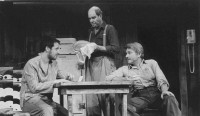
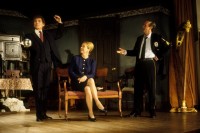
The brilliant, powerful and deeply moving play that marked the author’s triumphant return to Broadway. The play examines with compassion, humor and rare insight, the relationship of two long-estranged brothers who meet after many years to dispose of their late father’s belongings.
See Rock City
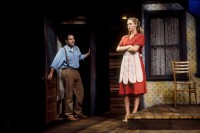
Picking up a year after the ending of Arlene Hutton’s critically acclaimed Last Train to Nibroc, this tender and funny sequel follows May and Raleigh through the end of World War II and introduces the characters of their two mothers-in-law. A medical condition keeps Raleigh from military service, and he is forced to sit idly on the porch, watching the cars drive by, as May supports them both as a high-school principal. Faced with daily rejection letters for his writing, constant criticism from his mother and taunts of cowardice from townspeople, Raleigh fights to find meaning in his new life. When tragedy strikes the family and May loses her job to returning soldiers, she discovers she must make an unimaginable sacrifice to save her relationship with Raleigh. This tender portrayal of married life, set against the backdrop of World War II, shows the best of the human spirit and its ability to overcome any and all obstacles. The second play of a trilogy, and the recipient of the MacLean Foundation’s “In the Spirit of America” Award, SEE ROCK CITY stands alone as a very funny, touching and universal portrayal of a young couple very much in love.